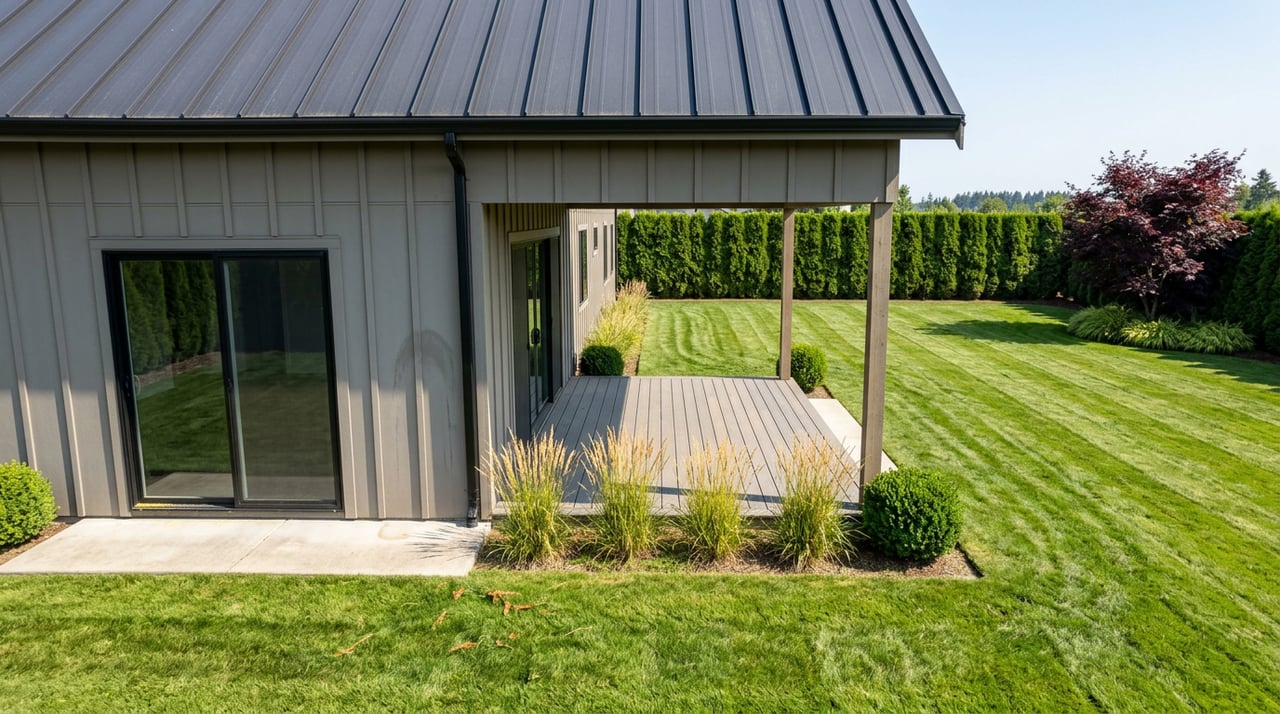
Cross NW West Union Road heading north through Bethany and the property address changes from Beaverton to Portland, even though nothing about the neighborhood itself changes at that line. But the house on the north side likely lists for $60,000 to $80,000 more than a comparable one just south of the road, and it probably comes with a monthly HOA bill the older house never had.
That gap is the real story hiding inside every "Bethany median price" headline. The number that shows up on portals and in market reports blends two markets that behave nothing alike: an older, established Bethany south of NW West Union Road and a newer, faster-building Bethany to the north. If you're comparing Bethany against other Westside neighborhoods using the median alone, you're comparing against a number that doesn't fully describe either half.
The line running through Bethany
South of West Union, you're in neighborhoods like Oakridge and Bethany Village, mostly built between the late 1980s and early 2000s. These are the homes with mature trees, updated kitchens on the second or third owner, and no HOA to speak of. Addresses here read Beaverton, even though everyone calls the area Bethany.
North of West Union is a different build era entirely. This is where Toll Brothers broke ground on the Hosford Farms Vista Collection north of Sato Elementary, where Noyes Development has been releasing farmhouse-style homes as Finnley Woods, and where Taylor Morrison picked up the build-out near Bethany Creek Falls after acquiring Polygon Homes NW. These communities sit inside Portland addresses even though they're every bit as much "Bethany" as the older stock to the south. They're also newer, larger on average, and almost always governed by an HOA.
That's the physical explanation for the price split. But it's not the interesting one.
What the extra dollars are actually paying for
Buyers touring north Bethany often assume the price premium is just newer finishes and bigger square footage. Some of it is. But two costs specific to new construction rarely show up until later in the process, and both catch people off guard.
The first is the property tax reset. Oregon's Measure 50 system means a newly built home's first tax bill often reflects the value of the land alone, since that's what was on record before the structure went up. Buyers who anchor their monthly payment estimate to that first-year number get an unpleasant surprise once the county reassesses based on the completed home. Budgeting roughly 1 percent of the purchase price annually for property taxes, rather than trusting the number on the listing sheet, avoids that mistake.
The second is the HOA structure itself. Arbor Ridge's HOA, one of the established associations on Bethany's north side, bills its annual assessment once a year in December for the following January, and that fee goes toward maintaining common areas: landscaping, fence repair, wetland maintenance, trail upkeep, retaining walls, and entrance monuments. Communities built under Oregon's Planned Community Act operate under a similar framework, with governing documents that spell out what the association can assess and enforce. None of that is a red flag. It's simply a cost the south-side comparison home doesn't carry, and it belongs in the monthly math before you fall in love with the bigger kitchen.
Why the gap doesn't move like a normal price premium
Here's the part that separates Bethany from a typical "new construction costs more" story. The north-side premium isn't stable. It compresses and expands depending on what's happening at Intel and Nike, because a meaningful share of the buyers who can afford a $900,000 executive home in Hosford Farms or Bethany Creek Falls are paying for it partly with equity compensation from those employers.
The evidence shows up in the rental data before it shows up in sale prices. As of a July 2026 market report on the 97229 zip code, larger homes in the 2,700-square-foot-plus range, mostly four and five bedrooms, have been landing on the rental market in noticeably higher numbers. The same report ties this directly to Intel-related departures, with families relocating out of state rather than selling into a softer luxury segment. That same report found the mid-range and entry-level bands, roughly $650,000 to $820,000, were the most active price tiers, while the luxury end was moving slowly.
Put those two facts together and the mechanism becomes clear. When large, newer, north-Bethany-style homes hit the rental market instead of the resale market, they don't disappear from the supply picture. They just compete with resale listings for the same pool of would-be buyers, and that pressure lands hardest on the exact segment that carries the north-side premium. The south side, with its smaller and more evenly distributed buyer pool, doesn't feel the same whiplash.
What the current numbers actually say
Bethany's three-month trailing median sale price sat at $766,000 through May 2026, down 1.8 percent from the same period the year before, with price per square foot at $303, up about 1 percent year over year. Homes sold in an average of 24 days, down sharply from 45 days a year earlier, and 115 homes closed that May compared with 85 the year before.
That last set of numbers looks like an acceleration story, and in the entry and mid-tier bands, it probably is. But other trackers looking at slightly different windows and boundaries put the pace closer to 35 to 46 days, and sold-to-list ratios in the 97229 report came in around 97.55 percent, meaning buyers are still negotiating roughly two and a half percent off asking on average. Mortgage rates through the same window ran between 6.25 and 6.375 percent according to regional credit union data cited in that report.
None of these numbers are wrong. They're measuring different slices of a market that genuinely behaves like two markets. A buyer comparing an entry-tier south Bethany listing against the headline "24 days on market" figure might reasonably expect a bidding war. A buyer looking at a luxury north-Bethany new build should expect something closer to the slower, more negotiable pace the luxury segment is actually showing right now.
| South of West Union Road | North of West Union Road | |
|---|---|---|
| Typical era | Late 1980s to early 2000s | 2010s to present, active construction |
| Address | Beaverton | Portland |
| Price positioning | Roughly $60K-$80K below comparable north-side homes | Premium tier, often $900K+ |
| HOA | Rare | Standard, often with annual or capital contribution fees |
| Current pace | Tracking closer to the faster, more competitive numbers | Slower, more negotiable in the luxury tier |
What this means if you're weighing a move now
If you're a buyer comparing the two sides of Bethany, run the full monthly number, not just the sale price, before you decide the north side is worth the premium. Ask for the HOA's current budget and reserve study, not just the fee schedule, and have your lender model the property tax bill using the completed home's value rather than the number on the current listing.
If you're a seller sitting on a larger, newer home north of West Union, price with an honest read on your actual competition. That competition increasingly includes homes that would have been listed for sale in past years but are now sitting in the rental pool instead. A pricing strategy built for the fast-moving entry tier won't necessarily work in a segment absorbing extra supply from a different direction. We've written previously about how these same rent-versus-sale dynamics play out for Bethany investors, which is worth a look if you're weighing whether to list or lease a larger property.
A few questions worth settling before you write an offer
Does the Beaverton versus Portland address actually affect resale value, or is it just a mailing quirk? It affects it indirectly. The address itself doesn't set the price, but it's a reliable marker for which side of the construction-era line a home sits on, and that era difference is what actually drives the value gap.
Why did my new-construction tax estimate turn out to be so much lower than the actual bill? Oregon's Measure 50 assessment often reflects land-only value in a new home's first year on record, before the county catches up to the completed structure. Budget for the reassessed number, not the first bill.
Is south Bethany just a cheaper compromise, or does it hold its own advantages? It holds its own case. Established landscaping, no HOA dues, and a buyer pool less concentrated in any single employer's stock performance all work in its favor, especially for buyers who value price stability over new finishes.
Bethany rewards the buyer or seller who treats it as two markets rather than one. If you want a strategic read on which side of that line makes sense for your specific goals, and how to price or structure an offer accordingly, ELEETE Real Estate is ready to walk through the numbers with you. Request a strategic consultation and let's map out your next move together.