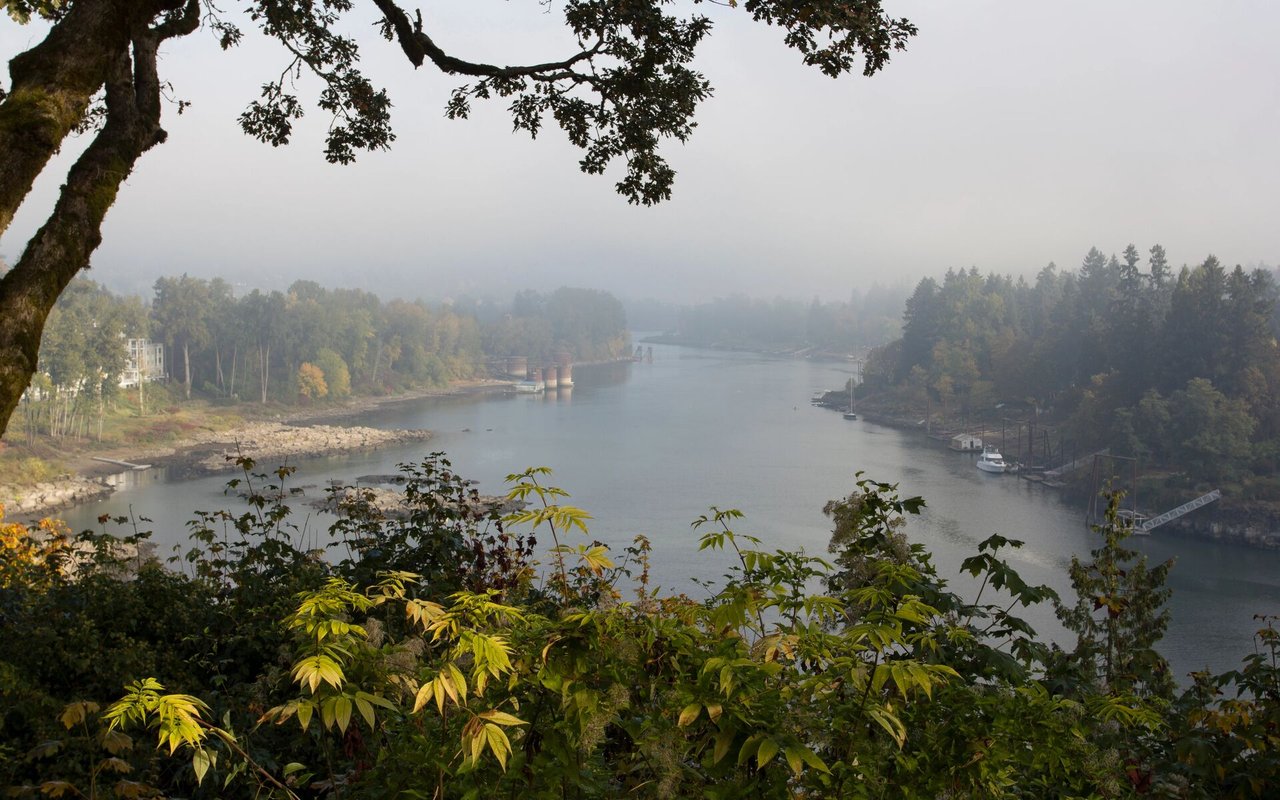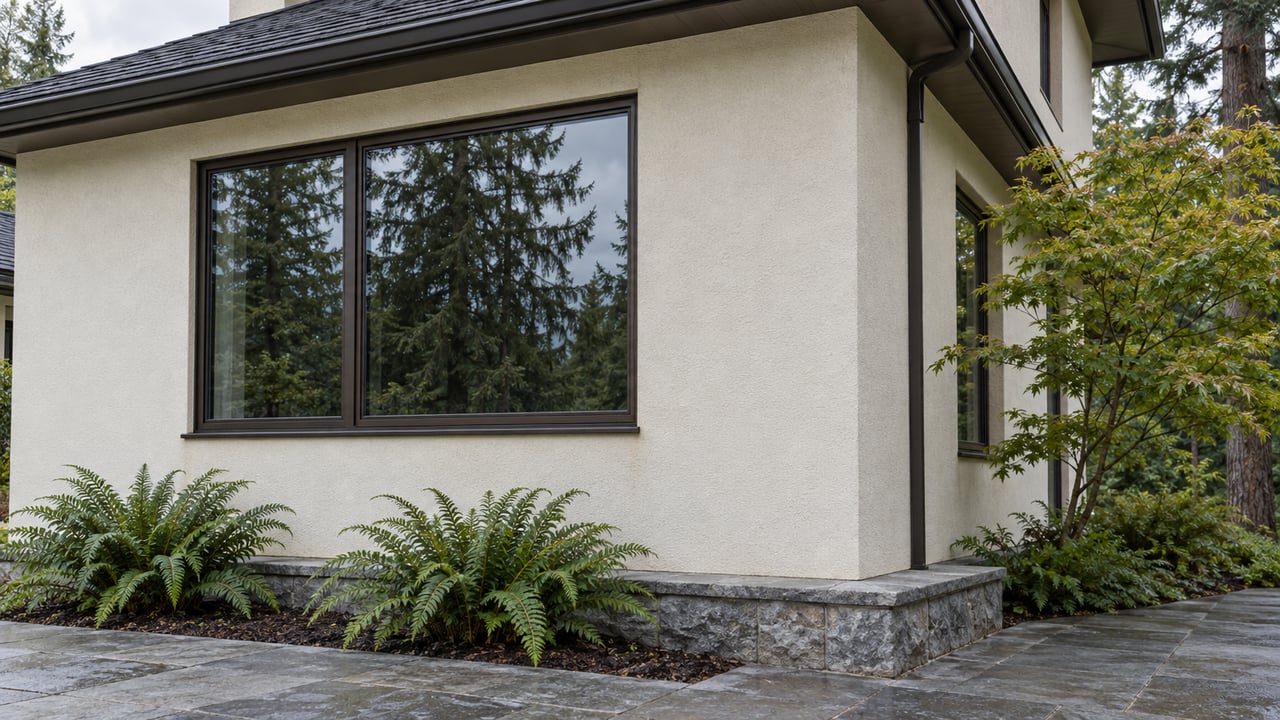
Walk the curving streets of Forest Heights on any weekend and you'll notice how consistent the homes look. Smooth stucco facades, arched entries, keystone details stacked over the garage doors, the kind of cohesion that comes from a neighborhood built in one deliberate wave rather than assembled house by house over fifty years. It's a good look, and it has held up. It's also, more often than a buyer expects, the first line item on an inspection report.
That raises a real question. Why does the same material keep showing up as a flag in a neighborhood known for being polished and well kept? The answer has less to do with upkeep and more to do with when Forest Heights was built and what was fashionable to put on a high-end home during that exact window.
A Finish Tied to One Decade
Forest Heights took shape as a master-planned community in the 1990s, and the neighborhood's detached homes and townhomes were built primarily after 2000. That timing lines up almost exactly with when exterior insulation finish systems, sold under names like EIFS and DRYVIT, became a preferred finish on higher-end residential construction across the Portland area. Pacific Exteriors NW names Forest Heights specifically among the neighborhoods where this stucco-look cladding shows up on high-end homes, in the same list as Bull Mountain in Tigard, Barrington Heights in West Linn, and LaCamas Shores in Camas.
The system was engineered in the 1980s for commercial buildings with concrete backing, before builders started applying the same assembly over wood-framed houses. Wood moves and holds moisture differently than concrete, and that mismatch is where the trouble in this climate starts.
Why This Is a Building Envelope Question, Not a Curb Appeal Question
A synthetic stucco system is built to seal a house tight against the outside. In a climate with months of steady rain, that seal works against the house once water finds a way in through a window flashing detail, a trim joint, or a penetration for a light fixture or hose bib. Instead of drying out, moisture gets trapped behind the finish and works on the sheathing and framing for years without ever showing up as a stain, crack, or soft spot you'd catch from the driveway. Pacific Exteriors NW states plainly that it will not install EIFS or DRYVIT anywhere in the Portland metro, and that it does not repair, caulk, or reseal existing systems either, because the product holds moisture internally in places that never show exterior signs of failure.
What Buyers and Sellers Actually Run Into
This is where it becomes a resale question rather than a maintenance question. A siding contractor that markets specifically to Forest Heights homeowners describes EIFS as a real liability at the point of sale, because many buyers are wary of the risk of hidden rot and moisture damage behind a finish that looks intact. The same source recommends replacing it with James Hardie fiber cement plank, pointing to lower maintenance and stronger buyer confidence at resale. Practically, that means the useful move for anyone selling a Forest Heights home clad in EIFS is the one that contractor is already pointing toward: settle the siding question in writing, with documentation, before a buyer's inspector raises it instead.
The Data Points to the Same Segment
Forest Heights sales over the twelve months ending in July 2026 showed roughly 83 single-family transactions at a median around $977,000, with typical homes selling in about 59 days and near 98 percent of list price. Over that same stretch, single-family prices held essentially flat year over year, while condo and attached product in the lower Northwest pocket of the area fell around 8 percent. That figure covers a market area that reaches slightly beyond the master-planned neighborhood into some of the older, higher-end homes on the surrounding hillsides, so it's a directional read rather than a Forest Heights-only number.
Read next to the siding history, that split says something specific. The segment holding its value, the detached hillside homes from the neighborhood's original 1990s and 2000s build-out, is also the segment most likely wearing the original stucco cladding from that same era. None of that shows up in a median price. It shows up the moment a buyer's inspector asks to bring in a moisture meter.
Before You List or Write an Offer
- Confirm what the cladding actually is, in writing. Traditional hard-coat stucco and EIFS can look identical from the street, and only someone familiar with both can reliably tell them apart.
- If the home has EIFS, ask for a moisture-specific inspection rather than a general visual review. A standard walk-through won't catch trapped moisture behind a wall that still looks fine.
- Ask whether any part of the exterior has already been replaced with fiber cement siding, and request the invoice or permit record if it has.
- If you're selling, bring a current envelope inspection to the table rather than waiting for a buyer to find the question first.
A Few Questions Worth Settling First
Is EIFS the same thing as regular stucco? No. Traditional stucco is a hard cement coating applied over a wire lath. EIFS is a foam insulation board covered with a thin synthetic finish coat, built to resemble stucco from the outside. The two perform very differently once water gets behind them, which is exactly why it's worth telling them apart before you set a price or write an offer.
Does having EIFS automatically mean a home has hidden damage? No. Plenty of EIFS installations have been properly detailed and maintained over the years. The material simply carries a different risk profile than fiber cement or hard-coat stucco in a wet climate, which is why a general home inspection isn't a substitute for a moisture-specific one on a home clad in it.
Is this only a Forest Heights issue? It shows up in other higher-end Portland-area neighborhoods built in the same era, including Bull Mountain and Barrington Heights. Forest Heights stands out mainly because so much of its housing stock came from one concentrated build-out in the exact years this finish was popular.
If you're weighing a Forest Heights listing and aren't certain what your home's exterior is actually made of, or you're about to write an offer on one and want the inspection scoped correctly from the start, Lee Davies and the ELEETE Real Estate team can help you get ahead of the question before it reaches the negotiating table. Request a strategic consultation.